
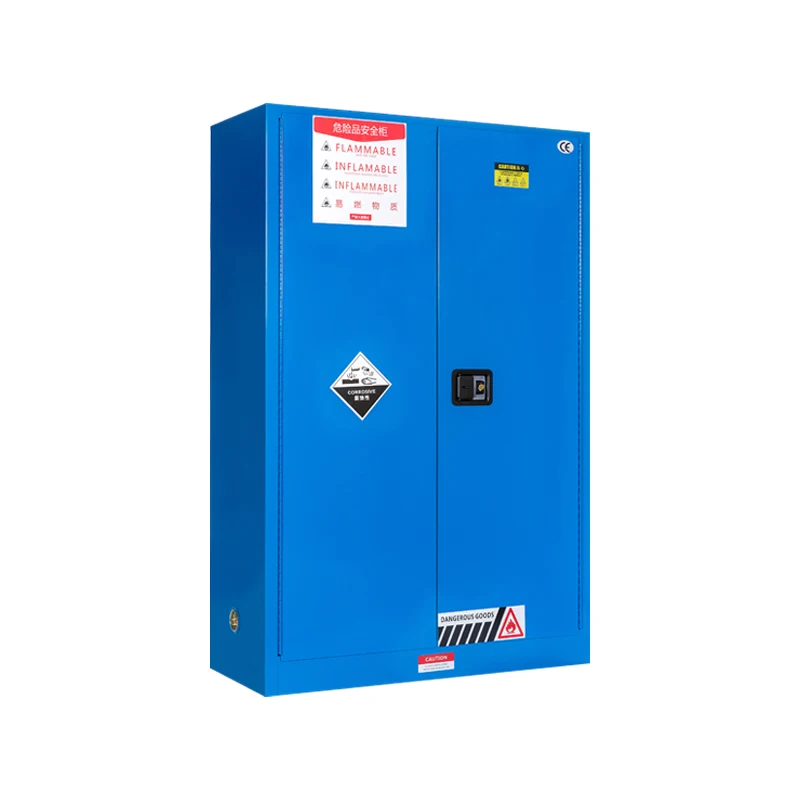
Key takeaways
- Classify the liquid from current SDS information before assigning storage.
- Apply cabinet capacity limits to the actual inventory, not the cabinet label alone.
- Separate incompatibility review from flammability classification.
The short answer
Store a liquid in a flammable storage cabinet when its hazard classification, workplace use and applicable rules call for protected flammable-liquid storage. Start with SDS Sections 2, 7, 9 and 10. Then compare the inventory with OSHA 29 CFR 1910.106 and the facility fire-safety plan. A red label, solvent odor or supplier category is not enough to make the decision.
Buyers comparing flammable storage cabinet models should therefore prepare the liquid category, container, package size and maximum working quantity before choosing a model.
Classify the liquid before counting gallons
OSHA 1910.106 classifies flammable liquids by flash point and, for some categories, boiling point. The category shown in an SDS should be checked against the rule that applies to the workplace. Mixtures and formulated products must be assessed from their own SDS; the name of one ingredient is not a substitute.
Separate three questions: Is the material a flammable liquid? Is the container acceptable? Does the proposed cabinet and room arrangement stay within the applicable quantity and construction rules?
- 01Classify the liquid from current SDS information before assigning storage.
- 02Apply cabinet capacity limits to the actual inventory, not the cabinet label alone.
- 03Separate incompatibility review from flammability classification.
What OSHA says about cabinet capacity
OSHA 1910.106(d)(3)(i) limits one storage cabinet to 60 gallons of Category 1, 2 or 3 flammable liquids, or 120 gallons of Category 4 flammable liquids. This is a regulatory ceiling, not a promise that a nominally rated cabinet will physically hold that mix of bottles or cans.
OSHA also specifies construction and labeling provisions in 1910.106(d)(3)(ii). A buyer should request evidence for the exact cabinet rather than assuming that a product color, listing title or marketplace badge proves compliance.
| Buyer check | Evidence to use | Do not substitute |
|---|---|---|
| Liquid category | Current SDS and applicable OSHA definition | Product name or cabinet color |
| Quantity | Maximum on-site inventory by category | Nominal cabinet gallons |
| Container | Container type and capacity | Total liquid volume alone |
| Cabinet | Exact model specification and documents | Family-level marketing claim |
Materials that do not automatically belong in the cabinet
A flammable cabinet should not become a general chemical cupboard. Oxidizers, reactive materials, compressed gases, corrosives and products with special storage instructions require their own compatibility and facility review. A liquid may be flammable and still be incompatible with another cabinet occupant.
Use the chemical segregation checklist to organize incompatibility questions, and review whether acids and bases can share a cabinet as a separate decision.
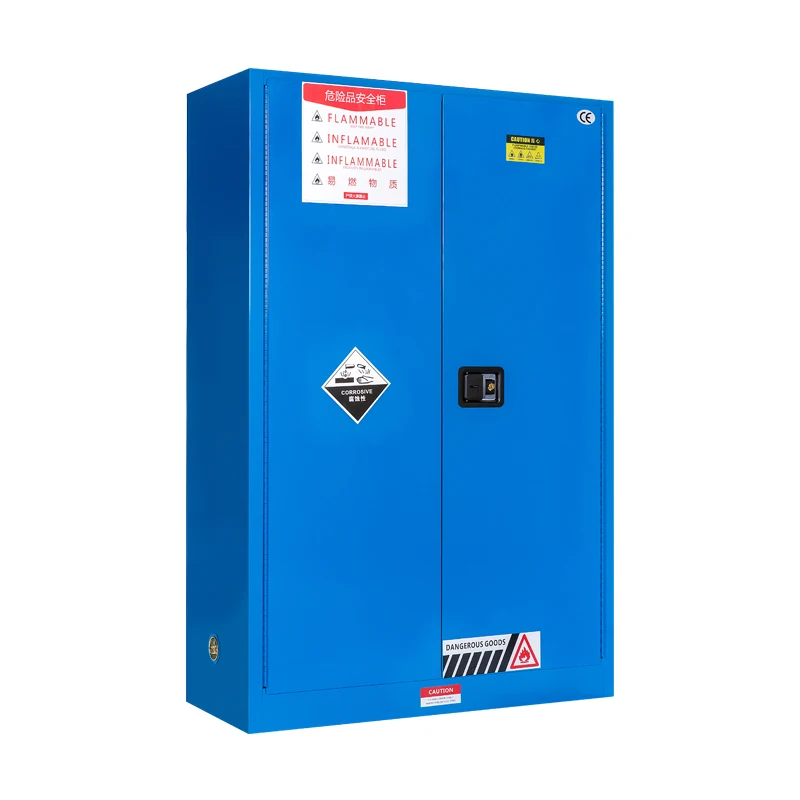
A defensible cabinet-assignment workflow
For project planning, connect this inventory to the flammable liquid storage planning page and use the flammable cabinet document checklist before issuing a purchase order.
- Create one row per product and SDS revision.
- Record OSHA/GHS flammability information, flash point and container size.
- Calculate maximum working inventory rather than current shelf count.
- Flag incompatibilities and special storage statements from SDS Sections 7 and 10.
- Confirm model construction, usable space and required documents.
- Have EHS and the authority having jurisdiction approve the final arrangement where required.
Common purchasing errors
The most common error is buying by a gallon label before counting containers. A second is mixing classification and compatibility: two materials may each qualify for flammable storage yet remain unsuitable cabinet neighbors. A third is accepting a family brochure as proof for every model.
Keep the selected model number on the specification, drawing and document request. If a required approval cannot be tied to that model and configuration, treat it as unverified.
Fields to include in the RFQ
| Field | Required detail |
|---|---|
| Liquids | Product name, SDS revision and category |
| Containers | Type, individual size and count |
| Inventory | Maximum quantity by category |
| Location | Room, destination and placement constraints |
| Documents | Named specification, test or approval evidence |
| Order | Model, quantity, OEM needs and delivery destination |
Work from the product SDS, not a familiar chemical name
Two products sold as solvent cleaners may have different flash points, formulations and storage instructions. Review each current SDS rather than assigning both from the word solvent. Record the product identifier and revision date so that a reformulation triggers review. If the SDS lacks information needed for classification or conflicts with the label, resolve that gap with the supplier and EHS before changing storage.
After classification, test the proposed inventory against three separate limits: the legal or code quantity for the cabinet and location, the physical number of containers that fit, and the compatibility of the planned occupants. Passing one does not imply passing the others. A cabinet can be below the OSHA gallon ceiling but physically overcrowded, or have spare space that should not be filled with an incompatible material.
- Keep aerosols and special containers in the scope of the applicable review.
- Count partly filled containers by the method required by the facility rule set.
- Remove waste accumulation from ordinary stock calculations when a different regulatory route applies.
- Update the assignment when SDS or inventory changes.
Control what enters the cabinet after purchase
Assign responsibility for reviewing new products before they are placed in the cabinet. Receiving staff should match the product and SDS revision to the approved inventory, confirm container size and condition, and route unfamiliar products to EHS. A cabinet plan fails quickly when new materials are stored wherever space is available.
Use a simple location register showing cabinet asset, shelf, product, container size and maximum quantity. Reconcile it periodically with physical stock and purchasing records. Remove expired, unidentified or damaged containers through the facility procedure; do not retain them because the cabinet is under its nominal gallon rating.
When the inventory changes, repeat classification, compatibility and quantity checks. A replacement formulation may have a different flash point or incompatibility statement. The cabinet remains suitable only while its approved contents, physical condition and supporting project assumptions remain valid.
References
- 29 CFR 1910.106 — Flammable LiquidsU.S. Occupational Safety and Health Administration
- 29 CFR 1910.1200 — Hazard CommunicationU.S. Occupational Safety and Health Administration
Sources support the cited regulatory and safety context. They do not certify a Safatrix product or replace model documentation and project review.