
Key takeaways
- Confirm the door configuration for the exact model.
- Review workflow and clearance as well as project requirements.
- Do not infer compliance from door terminology alone.
The practical difference
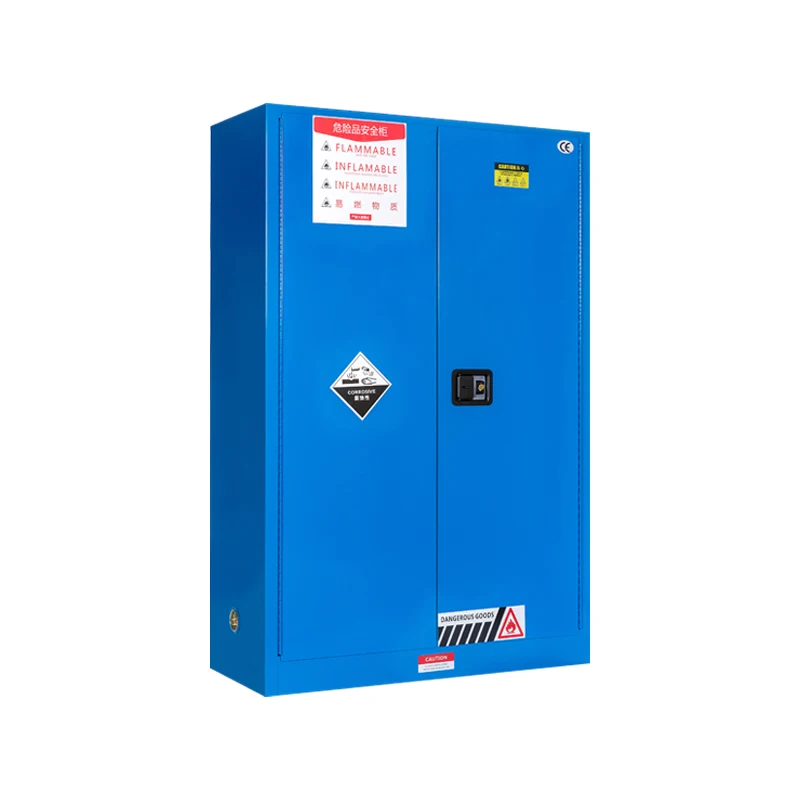
A self-closing configuration is designed to return the door toward the closed position through its closing mechanism. A manual-close configuration relies on the user to close and secure the door. Exact mechanisms and options vary by model.
Review the operating workflow
Consider loading frequency, whether users carry containers with both hands, door swing, aisle clearance and how the cabinet is supervised. A feature that suits one work area may interrupt another.
- Loading and retrieval frequency
- Door hold-open behavior
- Aisle and adjacent-equipment clearance
- User training and inspection process
- 01Confirm the door configuration for the exact model.
- 02Review workflow and clearance as well as project requirements.
- 03Do not infer compliance from door terminology alone.
Confirm destination and project requirements
Door terminology alone does not prove that a cabinet meets a regulation, code or project specification. Name the destination and required document, then request confirmation for the selected model.
Put the door choice in the RFQ
| Question | Why it matters |
|---|---|
| Manual or self-closing? | Defines the requested configuration |
| Single or double door? | Affects access and clearance |
| Required opening direction? | Affects room layout |
| Required documents? | Keeps evidence tied to the model |
Use a door-configuration decision record
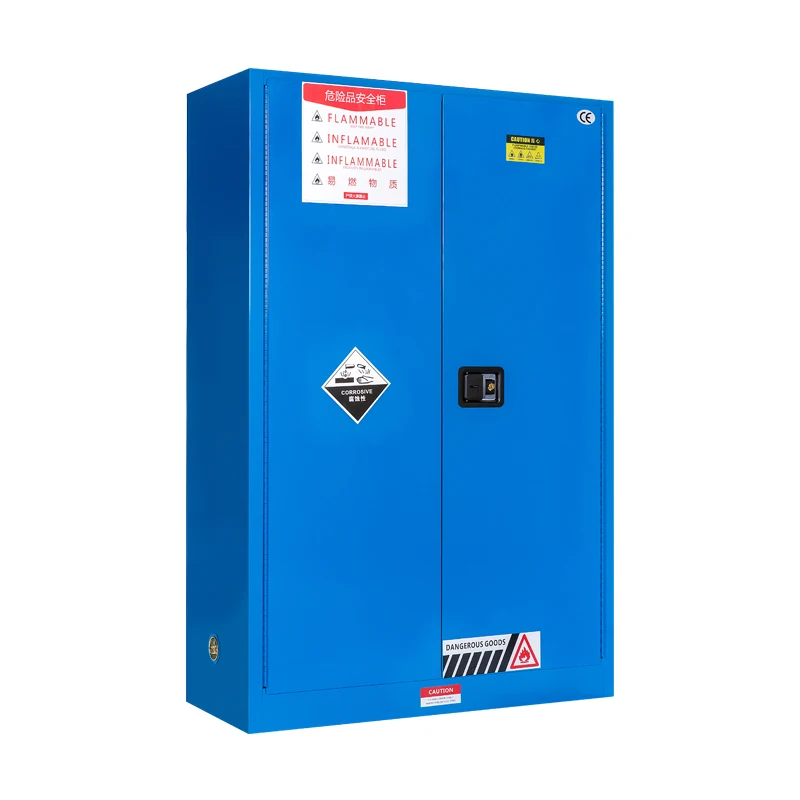
Record the destination, applicable project specification, door count, closing mechanism, hold-open behavior, latch, sill and clear opening. Review how a user carrying a container opens and closes the cabinet and whether the door conflicts with an aisle, bench or emergency route.
A self-closing label does not establish closing force, sequence, latch performance or approval scope. These remain model-level questions.
| Decision | Evidence |
|---|---|
| Required door type | Code/project clause and AHJ interpretation |
| Daily operation | Task observation and user workflow |
| Clearance | Room plan and model drawing |
| Mechanism | Exact model specification |
| Approval | Model-linked document |
Keep the door choice within the full cabinet review
Compare safety storage cabinet models and the project’s flammable liquid storage requirements before selecting the mechanism.
Use the form-free model specification request and the OSHA and project document review to state exactly which evidence must accompany the quotation.
Test the door choice against the work
Observe one complete storage task: approach with a container, unlock the cabinet, open the door, place or retrieve the container, close and secure the cabinet, and leave the aisle. Note where the user needs a free hand and whether a self-closing mechanism assists or interferes. Repeat with the largest routine container and with personal protective equipment normally worn in the area.
Then check abnormal conditions. Ask what happens if one leaf of a double door is blocked, a shelf projects into the closing path, the floor is uneven, or the latch is not engaged. These questions do not replace formal product evidence, but they expose operational assumptions before purchase. The final specification should describe door count, closing method, latch, clear opening and any hold-open behavior rather than relying on one feature word.
- Verify the configuration on the exact model drawing.
- Keep door swing outside required escape and work clearances.
- Do not wedge or defeat a closing mechanism.
- Include inspection of hinges, latch and closing action in maintenance.
Add a door acceptance test to receiving inspection
Inspect the delivered door configuration against the purchase order before the cabinet enters service. Confirm the number of doors, hinge side, clear opening, latch, closing mechanism and any supplied hold-open feature. Operate the door through repeated full cycles on a level installation and verify that it closes and secures as described without striking shelves or adjacent work.
Test the intended task with an empty representative container before chemicals are loaded. Confirm that the user can control the door, maintain a stable grip and keep the aisle clear. Record any adjustment permitted by the manufacturer and do not modify springs, latches or closers without documented authorization.
Include closing action, hinges, latch and obstruction checks in the facility inspection program. A self-closing mechanism that no longer closes is not self-correcting, while a manual door left open defeats the selected operating procedure. The purchase decision therefore includes training and maintenance, not only hardware.
References
- 29 CFR 1910.106 — Flammable LiquidsU.S. Occupational Safety and Health Administration
Sources support the cited regulatory and safety context. They do not certify a Safatrix product or replace model documentation and project review.